
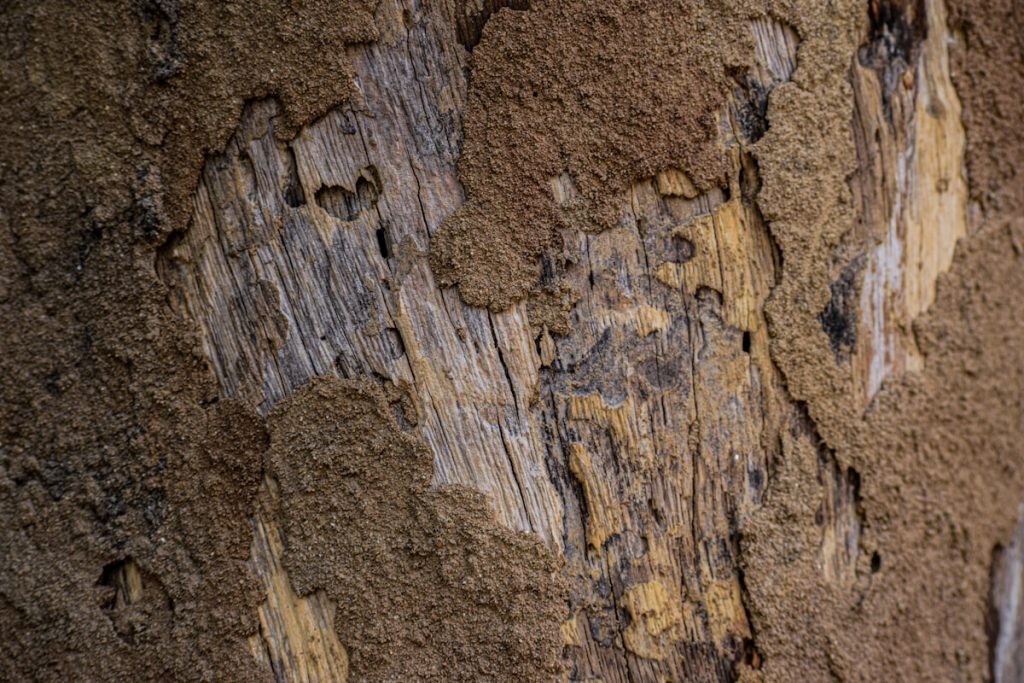
Termites might not be the first pest that comes to mind for Michigan homeowners, but they’re definitely here — and they cause millions of dollars in structural damage to Michigan homes every year. The Eastern subterranean termite is active throughout Southeast Michigan, quietly eating away at homes while owners remain unaware.
The good news? Termites leave signs if you know what to look for. The bad news? By the time most homeowners notice those signs, significant damage may already be done. Here’s how to spot a termite problem early and protect your home.
Understanding Michigan Termites
The Eastern subterranean termite is the only termite species that’s established in Michigan. Unlike drywood termites found in southern states, subterranean termites live in colonies underground and travel to food sources (your home’s wood) through mud tubes they construct.
Termite colonies can contain hundreds of thousands of individuals. Worker termites — the ones doing the damage — are small, pale, soft-bodied insects about the size of a grain of rice. They never stop eating. A mature colony can consume about a pound of wood per day, though damage typically accumulates over years rather than weeks or months.
7 Warning Signs of Termites in Your Michigan Home
1. Mud Tubes on Foundation Walls
This is the most distinctive sign of subterranean termites. Look for pencil-sized tubes of mud on your foundation walls, especially on the interior of your basement or crawl space. These tubes protect termites from open air as they travel between their underground colony and the wood in your home.
Mud tubes are typically tan or brown and follow the surface they’re built on. You might find them on concrete block walls, along pipes and utilities, or spanning the gap between soil and wood. If you see mud tubes, you have termites — or at least had them recently.
2. Swarmers (Flying Termites)
Every spring — typically between March and May in Michigan — mature termite colonies release winged reproductive termites called swarmers. These flying termites leave the colony to mate and establish new colonies.
If you see a swarm of small, winged insects inside your home, especially near windows or light fixtures, take it seriously. Swarmers inside almost always indicate a colony in or very near your home. Save a few specimens if possible — they’ll help with identification.
3. Discarded Wings
After termite swarmers land and find a mate, they shed their wings. You might find small piles of translucent wings on windowsills, near doors, or in spider webs in your basement. All four wings are the same size, which distinguishes them from flying ants (whose front wings are larger than their back wings).
4. Hollow-Sounding Wood
Termites eat wood from the inside out, leaving a thin veneer of wood or paint on the surface. If you tap on wood that sounds hollow or papery when it should be solid, termites may be the cause. This test is most useful on structural wood like floor joists, sill plates, and support beams.
5. Damaged or Sagging Wood
As termite damage accumulates, wood loses structural integrity. You might notice:
- Door frames that don’t fit properly anymore
- Windows that stick or won’t close
- Floors that sag or feel springy
- Baseboards that crumble when bumped
By the time damage is visible, it’s often extensive. Don’t wait for obvious signs before investigating.
6. Frass or Mud in Wood
Unlike drywood termites that leave clean wood pellets behind, subterranean termites bring soil and moisture with them. Damaged wood often contains mud or has a dark, water-stained appearance. Termite galleries (tunnels through wood) are lined with a thin layer of soil.
7. Blistering or Bubbling Paint
Termites sometimes feed on wood just below painted surfaces, creating moisture damage that looks like bubbling or blistering paint. While this can have other causes, it’s worth investigating if it appears on wood near ground level.
Where to Inspect for Termites
Termites need moisture and typically attack your home from below ground level. Focus your inspections on:
The Basement or Crawl Space
- Foundation walls, especially where wood meets concrete
- Floor joists and rim joists
- Support posts and beams
- Areas near plumbing and moisture sources
Exterior Foundation
- Walk the perimeter of your home
- Check where soil meets siding
- Inspect near porches, decks, and stairs
- Look around utility penetrations
Garage
- Attached garages often have wood in contact with or close to soil
- Check door frames and the area where the wall meets the floor
Damp Areas
- Near air conditioning units
- By downspouts and splash blocks
- Around leaky faucets or hose bibs
Siding
Making sure that the siding in your house is all set is also key.
Termites vs. Carpenter Ants: How to Tell the Difference
Michigan homeowners often confuse termite swarmers with flying carpenter ants. Here’s how to tell them apart:
Termite Swarmers:
- Straight, beaded antennae
- Thick waist (no pinch between body segments)
- Four wings of equal size and length
- Wings extend well beyond the body
Flying Carpenter Ants:
- Elbowed (bent) antennae
- Pinched waist with distinct segments
- Front wings longer than back wings
- Generally larger than termites
Both cause wood damage, but carpenter ants excavate wood for nesting (they don’t eat it), while termites actually consume wood. The treatment approaches differ, so correct identification matters.
What to Do If You Suspect Termites
If you’ve found any of the warning signs above, take these steps:
- Don’t panic — but don’t delay either. Termite damage is slow but cumulative.
- Document what you found — take photos of mud tubes, swarmers, damaged wood, or anything else suspicious.
- Don’t disturb the evidence — removing mud tubes or disturbing infested wood can make assessment more difficult.
- Call a pest control professional — termite inspection and treatment requires expertise and specialized equipment. DIY approaches are not effective.
- Get a thorough inspection — a professional should inspect your entire home, not just the area where you found evidence.
Protecting Your Michigan Home
Even if you don’t currently have termites, these preventive measures reduce your risk:
- Eliminate wood-to-soil contact around your home
- Keep mulch, wood chips, and landscaping materials away from your foundation
- Fix moisture problems promptly — leaky pipes, condensation, poor drainage
- Store firewood away from your house and off the ground
- Maintain gutters and downspouts to direct water away from the foundation
- Consider professional termite monitoring if you’re in a high-risk area
Don’t Wait Until You See Damage
Termite damage is almost never covered by homeowners insurance, and repairs can cost thousands of dollars. Regular professional inspections — especially for homes without prior termite treatment — are a smart investment.
If you’re concerned about termites in your Michigan home, call (734) 590-4035 for a professional inspection. We serve Livonia and the surrounding communities from our location at 38221 Plymouth Rd Suite 1, Livonia, MI 48150.
Catching termites early can save you thousands. Don’t let these silent destroyers eat away at your biggest investment.